
The inquiry
Temporary heat affects both people and masonry.
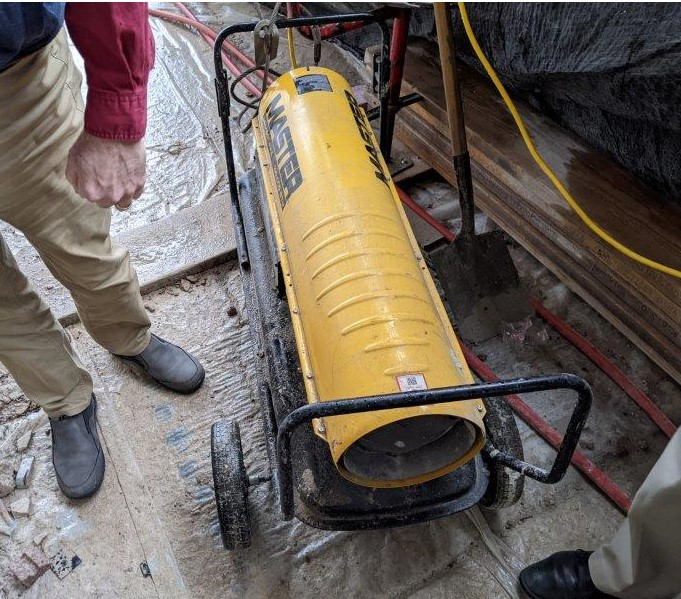
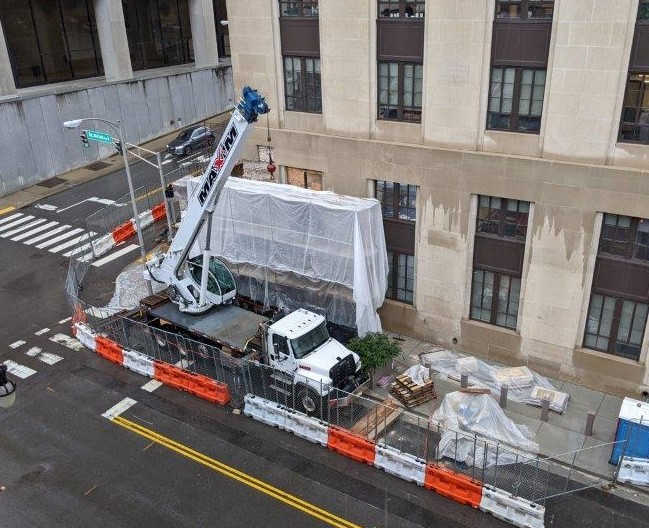
Florida Masonry was asked whether diesel fumes from equipment operating near a weather-protected masonry work area or covered mixing station could react with fresh or curing mortar and cause discoloration.
The questionCan diesel exhaust discolor or chemically react with fresh or curing mortar inside a protected masonry work area?
The expert answer
The response identified no reference to a chemical reaction between ordinary diesel fumes and fresh or curing mortar that would produce discoloration. Heavy black exhaust smoke from trucks or buses was not included in that conclusion.
The more significant concern is life safety. Burning fossil fuel creates carbon monoxide (CO), so a protected work area must be well ventilated. In the conditions shown with the inquiry, no ventilation equipment was visible.
Heating changes the mortar environment
The greatest effect of heating the work area is a reduction in humidity. That drier environment can influence several parts of mortar use and finishing:
- Mortar setting time can change.
- The need and timing for retempering can change.
- The appropriate time for tooling mortar joints can change.
- These variations can produce differences in joint color.
Each of these changes can contribute to variations in the finished color of the mortar joints, even if the diesel fumes themselves are not chemically discoloring the mortar.
Steam heat introduces another risk
Adding steam heat to offset the dry conditions can create a different problem: ice may form on or around the enclosure. Heating and moisture decisions therefore need to consider both the masonry materials and the safe operation of the protected work area.
Minimum review before proceeding
The response recommended, at minimum, reviewing the applicable cold-weather masonry construction requirements together with 29 CFR Parts 1910 and 1926 provisions addressing exhaust, temporary heat, worker exposure, and enclosures. That review supports both life safety and quality masonry work.
Key takeaways
The response found no reference to a chemical reaction between ordinary diesel fumes and fresh or curing mortar that would cause discoloration.
Heavy black exhaust smoke from trucks or buses was specifically outside the scope of that conclusion.
Fossil-fuel combustion creates carbon monoxide, making worker exposure and adequate ventilation the primary life-safety concerns.
Heating a protected work area reduces humidity and can affect mortar setting, retempering, tooling, and joint-color consistency.
Using steam heat to offset dry conditions can contribute to ice formation on or around the enclosure.
Florida Masonry Note
Weather protection changes the jobsite environment. The heating method, equipment location, enclosure configuration, ventilation, humidity, mortar handling, and worker exposure should be evaluated together before masonry installation begins.